Decorating a child’s bedroom with posters that last
How do you decorate a child’s room with posters? Animals, travel, botanical illustrations. Inspiration from Brunelia.

Key points
- 15 posters in the Bedroom posters collection, all in the table below.
- From 18,10 € in A4, up to 70,53 € in A0, 5 sizes for each poster.
- Printed in the Netherlands on demand, free delivery from 59 €.
The table
The 20 posters at a glance



Walls that tell a story, gently
A child’s room doesn’t need loud colors or limited-edition cartoon characters. It needs walls that soothe, inspire and last. A well-chosen poster stays with a child for years, and shapes their visual memory far more deeply than you might imagine. Here are our ideas for creating a world that is soft, vintage and stimulating all at once.
Illustrated animals, timeless
Foxes, owls, squirrels, whales. Animal illustrations in the botanical style of the 1950s never go out of fashion. They give the room narrative depth without falling into easy cuteness. Choose compositions on a beige or cream background, which is more restful on the eyes than pure white.
Soft landscapes, for dreaming
A mountain under the moon, a lighthouse beside a calm sea, a misty forest. These posters set a dreamy scene that helps a child fall asleep and invites them to invent stories. Pastel tones, faded purples and powdery blues suit the room better than a high-contrast landscape.
Travel, to open up the horizon
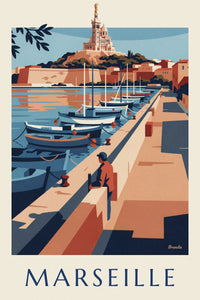
A poster of Provence, the Basque Country, or a city in Italy: these are images that plant the idea in a child’s imagination that the world exists beyond the walls of their room. Our posters of French and international cities, with their look of old railway advertisements, work wonderfully above a desk or a bookcase.
Botanical compositions, to calm
Dried flowers, herbariums, cherry blossom branches. This look creates a calm, grounded world that soothes restless evenings. Pair it with a warm-light lamp for a perfectly cozy effect.
The right size for a child’s room
A3 and A4 are our favorite sizes for bedrooms. A2 and A1 are better suited to a living room wall. Above a child’s bed, hang the poster at least 80 cm above the mattress for safety. Above a desk, hang it at eye level when the child is seated.
Creating a duo or a trio
3 A4 posters lined up horizontally create a storytelling frieze that looks lovely on a headboard wall. 2 vertical A3 posters side by side, spaced 4 to 6 cm apart, make a strong statement without crowding the space. For more generous walls, a gallery wall of 4 to 6 pieces, mixing sizes and themes, becomes a true colorful mind map.
Choosing a poster for the bedroom
To choose your poster, compare the subject, the colors and the sizes offered on the product page. The retro style describes the look of the illustration; the characteristics of the print should be checked in the offer details.

A child’s room in posters, made to last all through childhood
A poster in a child’s room should get through childhood without looking dated. That means it should appeal to the baby looking at the colors, to the 4-year-old learning their names, and to the 12-year-old who doesn’t find it babyish. The secret: choose subjects that aren’t explicitly for babies, but speak to every age group.
Multigenerational subjects for a child’s room
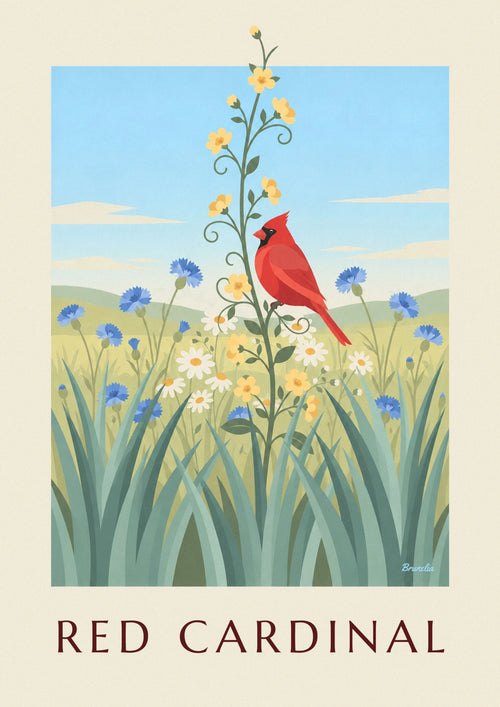
Vintage birds (herbarium plates, blue tit, robin), soft botanicals, illustrated forest animals, countryside landscapes, antique maps. Avoid pastel unicorns and motivational quotes that feel dated by age 6. See our bird collection.
The right size for a child’s room
A4 or A3 at most, because a child’s room is small and the furniture already takes up a lot of space. A trio of 3 A4 posters lined up gives an immersive effect without overflowing. Avoid A1, which overwhelms.
The right colors for a child’s room
Soft tones: ivory, sage green, rosy beige, light ochre. 3 colors maximum. Avoid saturated colors that disturb sleep. A pale terracotta accent wall can add structure if the room is large.
The right frames for a child’s room
Light wood (oak, beech) or matte white. Thin molding of 1.5 to 2 cm. Avoid metal frames, which can cause injury. Acrylic glass is recommended for safety (never standard glass at a child’s height).
Pitfalls to avoid in a child’s room
Childish posters (unicorns, princesses) that feel dated by age 5. Personalized posters with a name and date that become embarrassing in the teen years. Subjects that are frightening at bedtime. Choose multigenerational subjects that last 10 years. For a new baby gift, see our newborn gift guide.
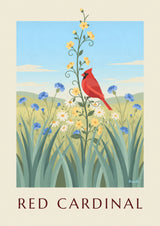
Our child’s room selection: Red cardinal and wildflowers poster. Also discover our bird collection.
For a Scandinavian look in the bedroom, see our Scandinavian bedroom guide.
Also in the journal: a calming bedroom, a gift for a new baby, Scandinavian in the bedroom.

Build this wall
3 posters from this article, at true scale


All 3 posters: 100,68 €
Frequently asked questions
You often ask us
Which multigenerational subjects work for a child’s room?
Vintage birds, soft botanicals, forest animals, countryside landscapes, antique maps. Avoid pastel unicorns and motivational quotes.
What size for a child’s room?
A4 or A3 at most. A trio of 3 A4 posters lined up for an immersive effect. Avoid A1, which overwhelms the room.
Which colors for a child’s room?
Soft tones: ivory, sage green, rosy beige, light ochre. 3 colors maximum. Avoid saturated colors that disturb sleep.
Which frame for a child’s room?
Light wood (oak, beech) or matte white. Thin molding of 1.5 to 2 cm. Acrylic glass recommended for safety.
Which pitfalls should you avoid in a child’s room?
Choose subjects that suit your child’s tastes and the space available. You can pair a theme they love today with a composition that’s easy to evolve. Plan the location and the mounting method before buying a frame.
Keep exploring